
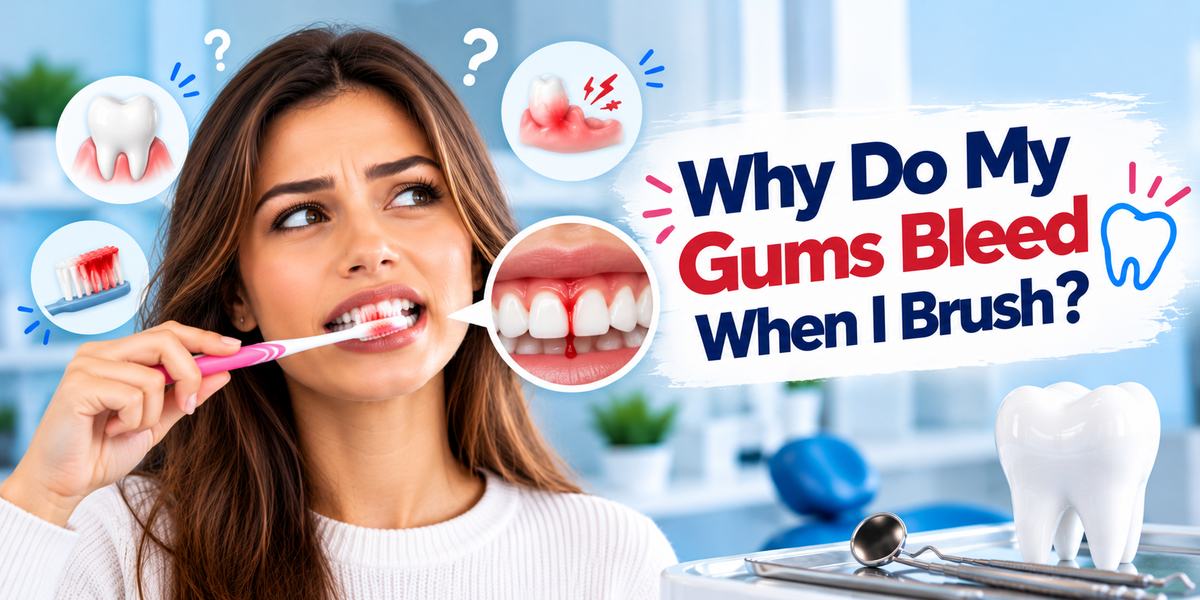
Have you ever noticed blood on your toothbrush after brushing? Perhaps your gums bleed when flossing, look slightly swollen, or feel tender when you touch them.
Many people assume bleeding gums are normal, especially if there is no pain. But healthy gums generally should not bleed regularly.
Bleeding gums can be an early warning sign of gum inflammation or periodontal disease. Understanding why it happens, what makes it worse, and how to prevent it can help protect your smile.
If you’re experiencing bleeding gums, here are seven important questions worth understanding.
1. Why Do My Gums Bleed When I Brush?
One of the most common causes is plaque buildup along the gumline.
Plaque is a sticky film containing bacteria that forms naturally on teeth. When it isn’t removed properly through brushing and flossing, it can irritate the surrounding gum tissue.
This irritation can cause gingivitis, the early stage of gum disease.
Common symptoms include:
- Red or swollen gums
- Bleeding during brushing or flossing
- Gum tenderness
- Persistent bad breath
The good news is that gingivitis can often be reversed with improved oral hygiene and appropriate professional care.
2. Can Brushing Too Hard Cause Bleeding Gums?
Yes. Brushing aggressively can irritate delicate gum tissue and contribute to gum recession over time.
Using a hard-bristled toothbrush or applying excessive pressure doesn’t make your teeth cleaner. It can actually damage your gums and contribute to enamel wear.
How to prevent it:
- Choose a soft-bristled toothbrush.
- Use gentle, circular brushing movements.
- Avoid scrubbing your teeth aggressively.
- Brush for approximately two minutes, twice daily.
- Replace your toothbrush when its bristles become worn.
If your gums continue bleeding despite gentle brushing, arrange a dental examination to identify the underlying cause.
3. Can Not Flossing Cause Gum Bleeding?
Absolutely.
Your toothbrush cannot effectively clean every surface between your teeth. Food particles and plaque can accumulate in these areas, irritating the gums.
When you begin flossing after a long break, you may notice some bleeding initially. However, recurring bleeding shouldn’t be ignored.
Prevention tips:
- Clean between your teeth every day.
- Use dental floss or suitable interdental brushes.
- Move floss gently rather than forcing it into your gums.
- Ask your dental professional to demonstrate the correct technique.
Consistent cleaning between teeth can help reduce plaque buildup and support healthier gums.
4. Is Bleeding Gums a Sign of Gum Disease?
It can be.
Gum disease generally develops in stages.
Gingivitis: This is the early stage, involving gum inflammation, redness, and bleeding. With appropriate care, it can often be reversed.
Periodontitis: If gum disease progresses, it can damage the tissues and bone supporting your teeth. Symptoms may include gum recession, persistent bad breath, loose teeth, and deeper spaces between the teeth and gums.
Advanced periodontal damage may not be reversible, although treatment can help control the disease.
This is why early assessment matters.
5. Can Stress, Smoking, or Medical Conditions Affect Gum Health?
Yes. Gum health is influenced by more than brushing habits.
Several factors may increase the risk of gum problems:
- Smoking: Can increase the risk of gum disease and interfere with healing.
- Diabetes: Poorly controlled blood sugar can increase susceptibility to gum infections.
- Certain medications: Some medications can cause dry mouth or affect gum tissues.
- Hormonal changes: Pregnancy and other hormonal changes can influence gum sensitivity.
- Stress: May contribute indirectly through changes in oral hygiene habits and other health-related behaviours.
If you have a medical condition or take regular medication, mention it during your dental appointment.
6. How Can I Stop My Gums from Bleeding?
The first step is identifying the cause. Simply changing toothpaste or using mouthwash may not solve the underlying problem.
You can support healthier gums by following these habits:
- Brush twice daily with fluoride toothpaste.
- Floss or clean between your teeth every day.
- Use a soft-bristled toothbrush.
- Limit frequent sugary snacks and drinks.
- Avoid smoking and tobacco products.
- Maintain regular dental examinations and professional cleanings.
If plaque has hardened into tartar, brushing and flossing alone cannot remove it. Professional dental cleaning may be necessary.
If bleeding happens frequently, book an examination rather than waiting for it to disappear.
7. When Should I Visit a Dentist for Bleeding Gums?
If your gums bleed repeatedly, appear swollen, or remain tender, it’s time to seek professional dental advice.
You should also arrange an assessment if you notice:
- Persistent bad breath
- Receding gums
- Loose teeth
- Pus around the gums
- Changes in the way your teeth fit together
A dental professional can assess your gum health, identify possible causes, and recommend appropriate treatment.
Severe swelling, fever, or rapidly worsening symptoms require prompt assessment.
Protect Your Gum Health with Regular Dental Care in Hamilton
Healthy gums are essential for maintaining strong, functional teeth. Unfortunately, gum disease can progress without significant pain, making regular dental care particularly important.
At The Dental Place in Hamilton, patients can discuss concerns about bleeding gums, receive an assessment, and learn about suitable options for maintaining their oral health.
Don’t Ignore the Warning Signs
Bleeding gums aren’t something you should simply get used to. Addressing the cause early can help prevent more serious complications.
Book an appointment with The Dental Place in Hamilton and take the first step towards healthier gums and a healthier smile.
The Dental Place
Hamilton, Ontario
Website: https://thedentalplace.co/
Dental symptoms can have different causes. A professional examination is necessary for an accurate diagnosis and appropriate treatment recommendation.