
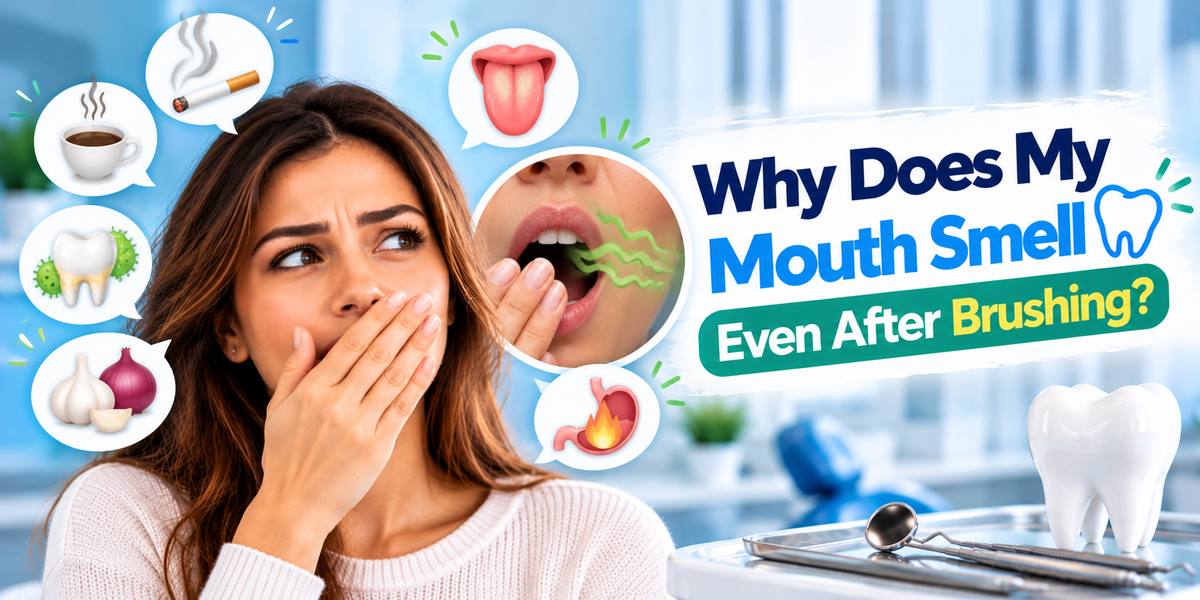
Have you ever brushed your teeth, used mouthwash, and still noticed an unpleasant smell coming from your mouth? You’re not alone. Persistent bad breath, medically known as halitosis, is a common concern for many people.
While occasional bad breath after eating certain foods is normal, an unpleasant smell that continues despite regular brushing may indicate an underlying oral health issue.
But what actually causes it? Is it poor oral hygiene, gum disease, dry mouth, or something else?
If you’re experiencing persistent bad breath in Hamilton, Ontario, here are seven possible causes, along with practical ways to prevent it.
1. Can Bacteria on Your Tongue Cause Bad Breath?
Yes! Your tongue can be one of the major sources of persistent bad breath.
Its uneven surface can trap food particles, dead cells, and bacteria. These bacteria break down organic material and release unpleasant-smelling compounds.
Even if you brush your teeth regularly, neglecting your tongue can allow odour-causing bacteria to accumulate.
How to prevent it:
- Gently clean your tongue every day.
- Use a tongue scraper or a soft toothbrush.
- Avoid scraping too aggressively.
- Maintain regular brushing and flossing habits.
Cleaning your tongue should be part of your everyday oral hygiene routine.
2. Can Gum Disease Cause Persistent Bad Breath?
Absolutely. Gum disease is another common reason for ongoing bad breath.
When plaque accumulates around the gumline, bacteria can irritate the gums and cause inflammation. In more advanced cases, infection and deeper spaces around the teeth can contribute to persistent unpleasant odours.
Other warning signs may include:
- Bleeding gums
- Red or swollen gums
- Gum recession
- Tenderness around the teeth
- Persistent bad breath
Prevention: Brush twice daily, clean between your teeth every day, and schedule regular dental examinations and professional cleanings.
If you notice these symptoms, don’t rely on mouthwash alone. A dental assessment can help identify whether gum disease is present.
3. Does Dry Mouth Make Your Breath Smell Bad?
Yes. Saliva plays an important role in keeping your mouth clean.
It helps wash away food particles, neutralize acids, and control bacteria. When saliva production decreases, bacteria and debris can accumulate more easily, contributing to bad breath.
Dry mouth can happen because of:
- Dehydration
- Sleeping with your mouth open
- Certain medications
- Tobacco use
- Some medical conditions
How to prevent it:
- Drink water regularly throughout the day.
- Limit excessive caffeine if it worsens your symptoms.
- Consider sugar-free gum to stimulate saliva.
- Ask your healthcare professional about persistent dry mouth.
If you regularly wake up with a dry mouth, discuss it with your dentist.
4. Can Cavities and Tooth Infections Cause Bad Breath?
Yes. Untreated tooth decay can create spaces where food particles and bacteria accumulate.
When decay becomes more advanced, it may contribute to unpleasant odours and an unpleasant taste. Dental infections can also cause persistent bad breath.
Watch for symptoms such as:
- Toothache
- Sensitivity to hot or cold
- Pain when chewing
- Visible holes or dark spots
- Swelling around a tooth
Prevention: Maintain good oral hygiene, limit frequent sugary snacks and drinks, and address dental problems early.
If you experience tooth pain accompanied by swelling or fever, seek prompt dental care.
5. Can Certain Foods Cause Bad Breath Even After Brushing?
Yes. Garlic, onions, and some strongly flavoured foods contain compounds that can contribute to bad breath.
Some of these compounds enter the bloodstream after digestion and are eventually released through your lungs. This means brushing alone may not immediately eliminate the smell.
What can help?
- Drink water after meals.
- Clean your teeth and tongue regularly.
- Eat a balanced diet.
- Consider sugar-free gum to stimulate saliva.
Food-related bad breath is usually temporary, but persistent symptoms deserve further investigation.
6. Can Smoking and Alcohol Make Bad Breath Worse?
Both smoking and alcohol can contribute to unpleasant breath.
Tobacco products can leave a lingering smell, increase the risk of gum disease, and affect the tissues inside your mouth.
Alcohol can also contribute to dry mouth, reducing the natural cleansing effect of saliva.
Prevention: Avoid tobacco products, limit alcohol consumption, stay hydrated, and maintain regular dental care.
Quitting smoking can also benefit your gums and overall oral health.
7. When Should You Visit a Dentist for Bad Breath?
If bad breath continues despite consistent brushing, tongue cleaning, and flossing, it may be time for a dental examination.
Your dentist can check for:
- Gum disease
- Tooth decay
- Dental infections
- Food trapped around teeth or restorations
- Other oral health conditions
If no oral cause is identified, your dentist may recommend consulting a healthcare professional. Persistent bad breath can sometimes be associated with conditions outside the mouth, including certain sinus, throat, digestive, or metabolic problems.
Identifying the actual cause is more effective than repeatedly masking the smell with breath mints or mouthwash.
Fresh Breath Starts with Healthy Oral Habits
Bad breath isn’t always caused by poor brushing. Sometimes, it can be an early sign that something needs attention.
The good news is that many causes can be managed with appropriate treatment and consistent oral hygiene.
If you’re experiencing persistent bad breath, bleeding gums, dry mouth, or unexplained changes in your breath, don’t ignore the symptoms.
Looking for a Dentist in Hamilton?
At The Dental Place, patients can discuss their oral health concerns and receive guidance on maintaining healthier teeth and gums.
Don’t just mask bad breath. Find out what’s causing it.
Book your dental appointment with The Dental Place in Hamilton today.
The Dental Place
Hamilton, Ontario
Website: https://thedentalplace.co/
Persistent bad breath can have several causes. A dental examination can help identify oral health concerns and determine whether further medical assessment is needed.