When it comes to restoring damaged or decayed teeth, modern dentistry offers a variety of effective and aesthetic options. One of the most popular choices among patients and dentists alike is porcelain inlays. These restorations combine the strength and durability of modern materials with a beautifully natural look that blends seamlessly with your existing teeth. At The Dental Place, we often recommend porcelain inlays for patients who want a long-lasting, conservative, and visually appealing solution for tooth repair.
Let’s take a closer look at what porcelain inlays are and the many benefits they offer in terms of strength, longevity, and natural appearance.
What Are Porcelain Inlays?
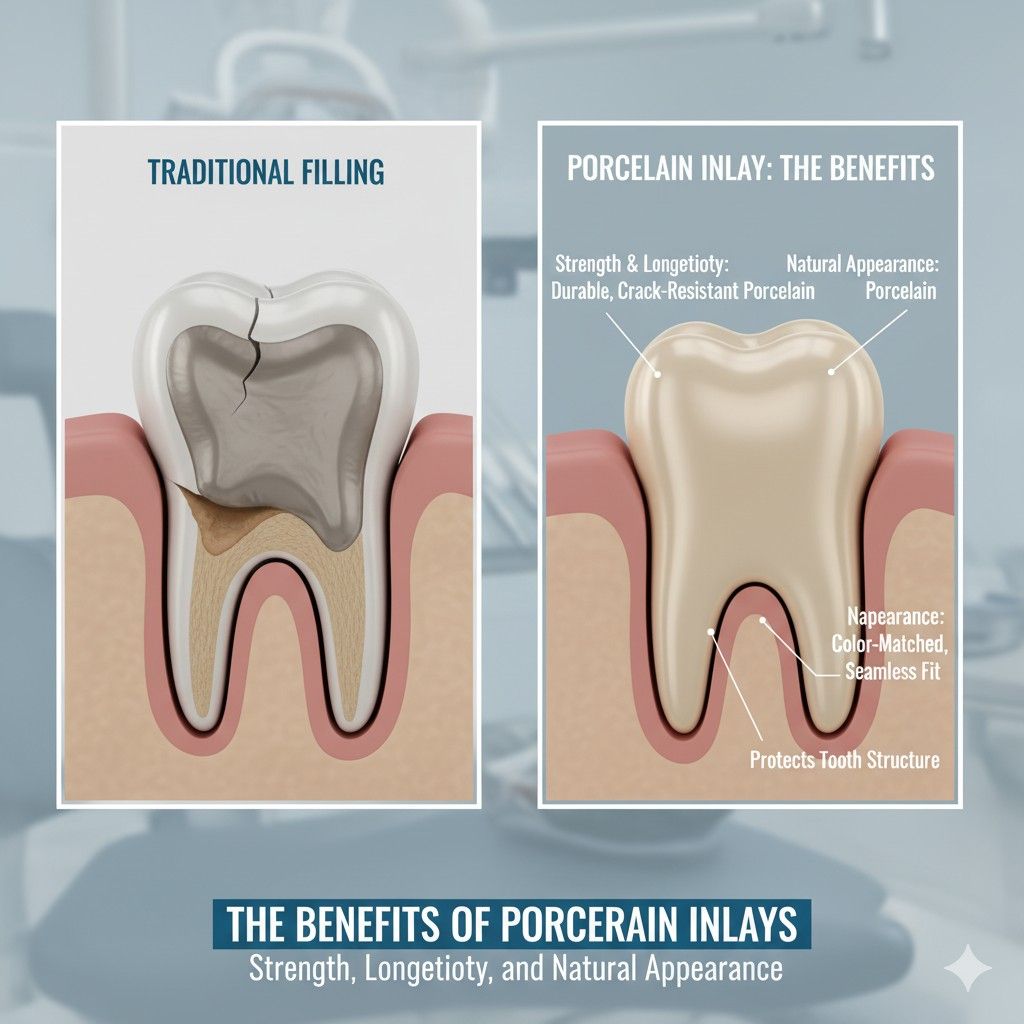
Porcelain inlays are custom-made restorations used to repair teeth that have mild to moderate decay or damage, often on the chewing surfaces of molars or premolars. They are an excellent alternative to traditional metal fillings, providing a more precise fit and a significantly more natural appearance.
Unlike fillings, which are molded directly into the cavity in your mouth, inlays are fabricated in a dental laboratory based on an impression of your tooth. Once crafted, the inlay is bonded securely to the tooth, creating a restoration that feels smooth, fits perfectly, and functions just like a natural tooth.
-
Exceptional Strength and Durability
One of the biggest advantages of porcelain inlays is their incredible strength. While traditional composite fillings are effective, they can sometimes wear down or crack under the pressure of chewing over time. Porcelain, on the other hand, is a much harder material and can withstand significant biting forces—making it ideal for restoring back teeth that do most of the chewing work.
Because the inlay is custom-made to fit the exact shape of your cavity, it bonds securely to the tooth structure, reinforcing it and helping to prevent further damage. This bonding process essentially strengthens the tooth from within, providing stability that a standard filling simply cannot match.
As a result, porcelain inlays can last for many years with proper care—often 10 to 20 years or more—making them a long-term investment in your oral health.
-
Long-Lasting Restoration for Better Oral Health
Porcelain inlays don’t just look good—they’re designed to stand the test of time. The material is resistant to staining and wear, meaning your restoration will maintain its smooth finish and color for years to come. Unlike composite fillings, porcelain inlays won’t discolor or absorb pigments from coffee, tea, or other foods.
Additionally, porcelain inlays provide an extremely tight seal between the restoration and the natural tooth structure. This helps prevent bacteria from entering the tooth and reduces the risk of future decay or infection. Since the inlay is precisely fitted, it also allows for easier cleaning and flossing around the tooth, promoting better oral hygiene in the long run.
For patients who want a restoration that offers both durability and peace of mind, porcelain inlays are a reliable and health-conscious choice.
-
A Beautiful, Natural Appearance
A major reason patients love porcelain inlays is their remarkably natural appearance. The porcelain material can be color-matched to blend perfectly with your surrounding teeth, making the restoration virtually invisible when you smile or talk. This is a significant upgrade from traditional silver (amalgam) fillings, which are easily noticeable and can darken over time.
Porcelain also reflects light similarly to natural enamel, giving your restored tooth a lifelike translucency and shine. Whether you’re laughing, speaking, or simply smiling for a photo, your porcelain inlay will look just like the rest of your natural teeth—enhancing your confidence and comfort.
-
Conservative and Precise Treatment
Another benefit of porcelain inlays is that they allow for conservative tooth restoration. Inlays require less removal of the natural tooth structure compared to full dental crowns, meaning more of your healthy tooth is preserved. This approach maintains the tooth’s integrity and strength while still providing excellent coverage for areas affected by decay or damage.
Since each porcelain inlay is custom-designed for your tooth, the fit is extremely precise. This ensures optimal comfort, function, and aesthetics—without the uneven surfaces or rough edges that can sometimes occur with direct fillings.
-
Easy Maintenance and Lasting Comfort
Caring for a porcelain inlay is simple. You can continue your normal brushing, flossing, and routine dental visits as usual. Because porcelain is smooth and nonporous, it resists plaque buildup and staining, helping to maintain a clean, healthy smile.
Most patients find that porcelain inlays feel completely natural in the mouth—there’s no discomfort or noticeable difference between the restored tooth and the surrounding ones. With proper dental hygiene and regular check-ups, your porcelain inlay can remain a strong, beautiful part of your smile for many years.
Restore Your Smile with Confidence
At The Dental Place, our goal is to provide restorations that are both functional and beautiful. Porcelain inlays offer an ideal blend of strength, longevity, and natural beauty, making them a trusted choice for patients who want durable, long-lasting results that look completely natural.
If you’re interested in learning more about porcelain inlays or think you may need a tooth restored, schedule a consultation with our friendly team today. We’ll help you explore your options and find the perfect solution for your smile.