
Dental Tips

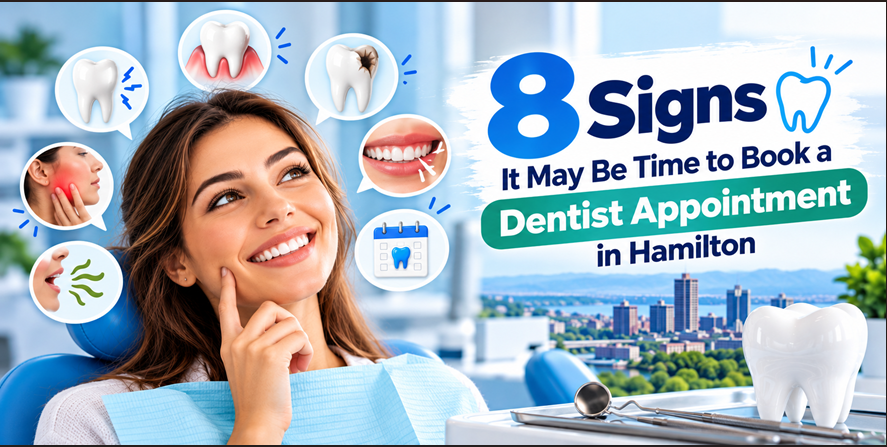
8 Signs It May Be Time to Book a Dentist Appointment

Many dental problems don’t begin with severe pain. Sometimes, your mouth gives you smaller warning signs first—a little sensitivity, bleeding when brushing, bad breath that won’t go away, or a tooth that suddenly feels different.

It can be tempting to ignore these changes, especially when they don’t interfere with your daily routine. But paying attention to early signs can help you address potential dental concerns before they become more complicated.

If you’re in Hamilton, Ontario, here are eight signs that may be worth discussing with your dentist.

1. Your Gums Bleed Regularly

Seeing a small amount of blood occasionally may be easy to dismiss, but regular gum bleeding shouldn’t be ignored.

Bleeding can be associated with plaque buildup and gum inflammation. Your dental professional can examine your gums and help determine whether changes to your oral hygiene routine or additional care may be needed.

2. Your Teeth Have Suddenly Become Sensitive

Do cold drinks make your teeth hurt? Does a spoonful of ice cream cause a sharp sensation?

Sensitivity can have different causes, including exposed tooth surfaces, gum recession, enamel wear, cavities, or other dental concerns.

If sensitivity keeps returning or becomes stronger, a dental examination can help identify the cause.

3. You Have Persistent Bad Breath

Everyone experiences bad breath occasionally.

However, persistent bad breath despite regular brushing and mouth care can sometimes be associated with oral health concerns such as plaque buildup, gum problems, or other conditions.

If it doesn’t seem to improve, mention it to your dentist.

4. You Notice a Crack, Chip, or Rough Edge

A chipped or cracked tooth may not always hurt immediately.

However, damaged teeth can be more vulnerable to further wear or damage. If you’ve noticed a new crack, chip, sharp edge, or change in the shape of a tooth, it’s worth having it evaluated.

Don’t assume that a painless problem doesn’t require attention.

5. Your Tooth Hurts When You Bite

Pain or discomfort when biting down can be a sign that something needs to be investigated.

The cause can vary, which is why it’s better not to diagnose the problem yourself. Your dentist can examine the tooth and determine what may be contributing to the discomfort.

If the pain persists, schedule an appointment rather than simply chewing on the other side of your mouth.

6. Your Teeth Look Different Than They Used To

Changes in your teeth can happen gradually.

You may notice:

  • New discoloration
  • Dark spots
  • Visible buildup
  • Increased wear
  • Changes around an existing filling or crown
  • A tooth that appears longer because of gum changes

Not every change is an emergency, but new or noticeable changes are worth mentioning during a dental visit.

7. Your Jaw Feels Sore or Your Mouth Clicks

Jaw discomfort can sometimes be connected with clenching, grinding, bite-related issues, or other factors.

If you regularly wake up with jaw soreness, experience discomfort while chewing, or notice persistent clicking or difficulty opening your mouth, talk to your dental professional.

Getting the issue assessed can help determine whether further evaluation or treatment is appropriate.

8. It’s Been a Long Time Since Your Last Dental Visit

This might be the simplest sign of all.

If you can’t remember the last time you had a dental examination, it may be time to schedule one—even if you currently feel fine.

Regular dental visits allow your dental team to monitor your teeth and gums over time and provide preventive care based on your individual needs.

Don’t Wait for a Dental Emergency

A dental appointment isn’t only for toothaches.

Small changes in your teeth, gums, or mouth can be useful reasons to check in with your dentist. Addressing concerns early may help prevent them from becoming larger problems later.

For patients and families in Hamilton, Ontario, The Dental Place offers a place to discuss your oral health concerns and receive personalized dental care.

Ready to Check on Your Smile?

Whether you’re experiencing a new dental concern or simply overdue for a checkup, book an appointment with The Dental Place in Hamilton.

The Dental Place, Hamilton, Ontario

If you experience severe dental pain, significant swelling, uncontrolled bleeding, or a dental injury, seek prompt professional dental care.
Dental Oral

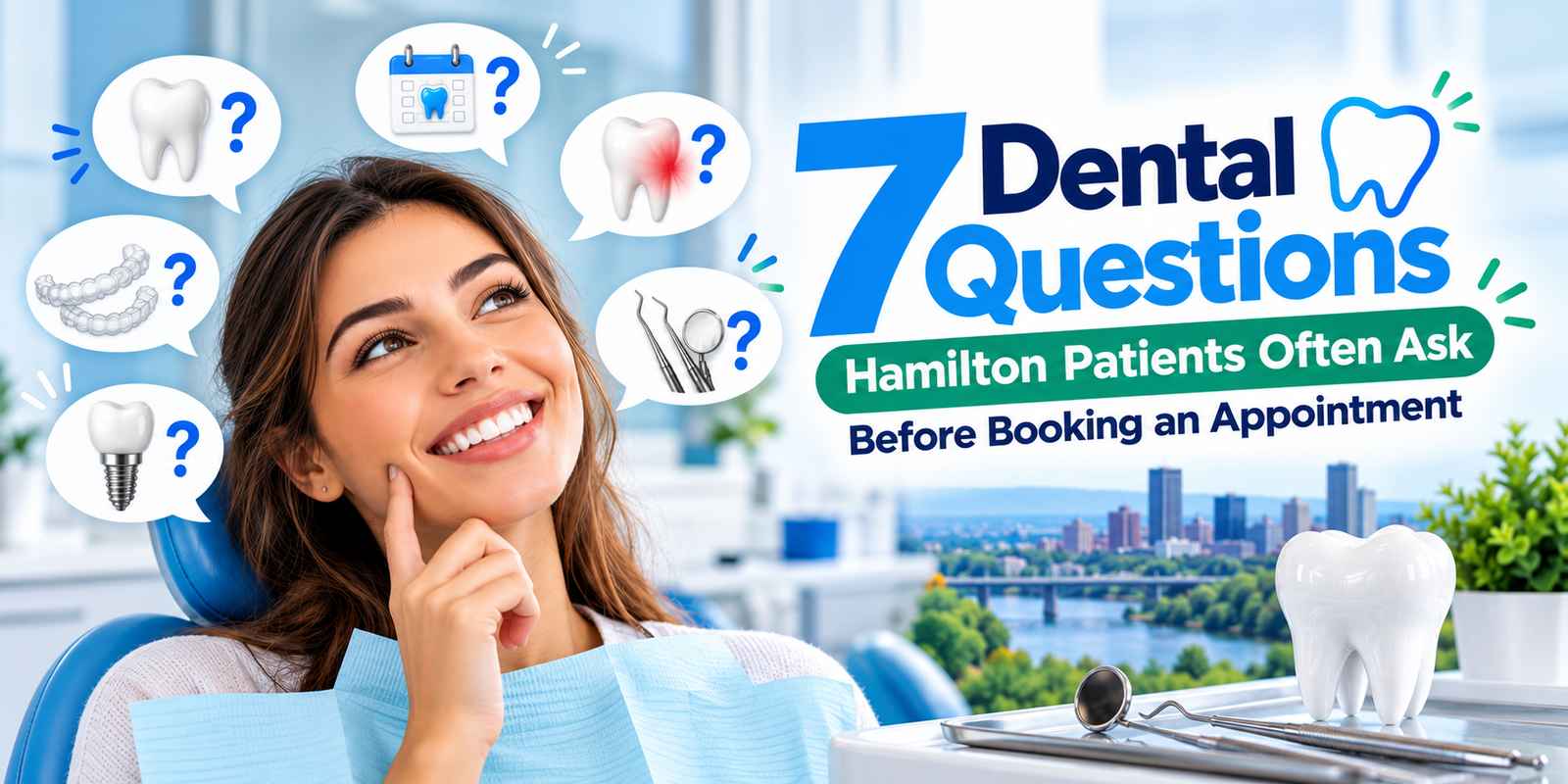
7 Dental Questions Patients Often Ask Before Booking an Appointment

Booking a dental appointment can feel simple—until the questions start coming.

“Do I need to see a dentist if nothing hurts?”
“Why are my teeth suddenly sensitive?”
“How often should I get my teeth cleaned?”
“Can a small cavity really get worse if I leave it alone?”

These are the kinds of questions many people have before making an appointment. And they’re worth asking. Understanding your oral health can help you recognize when it’s time for a checkup and avoid waiting until a minor concern becomes a bigger one.

If you’re in Hamilton, Ontario, here are seven common dental questions and what you should know.

1. How Often Should I Go to the Dentist?

There isn’t one appointment schedule that works for everyone.

Some patients may benefit from routine checkups around every six months, while others may need appointments more or less frequently depending on their oral health, dental history, gum health, and risk of cavities.

The important thing is consistency.

Regular dental visits allow your dental team to monitor changes over time and identify concerns before they become more difficult to manage.

2. Do I Need a Dental Checkup If Nothing Hurts?

Yes, you may still need one.

One of the biggest misconceptions about dental health is that pain is the only sign something is wrong.

Some cavities, gum problems, and other dental concerns may develop without obvious symptoms. By the time discomfort appears, the problem may require more extensive treatment.

A routine examination can help identify issues that you may not notice at home.

No toothache doesn’t automatically mean no dental problem.

3. Why Do My Gums Bleed When I Brush?

If your gums regularly bleed when brushing or flossing, don’t simply ignore it.

Bleeding can be associated with plaque buildup and gum inflammation. Other factors can also contribute to gum bleeding.

Your dentist can examine your gums and help determine what’s happening. Improving your daily brushing and interdental cleaning routine may also be part of the solution.

If bleeding continues, mention it during your dental appointment.

4. Why Are My Teeth Sensitive to Hot or Cold?

That sharp feeling when you drink a cold beverage or eat something hot can be uncomfortable—and sometimes frustrating.

Tooth sensitivity can have several possible causes, including worn enamel, exposed tooth surfaces, gum recession, cavities, or other dental problems.

If sensitivity is frequent, getting worse, or affecting what you eat and drink, it’s worth having it checked rather than simply avoiding your favourite foods.

5. Can a Small Cavity Really Become a Bigger Problem?

It can.

Dental decay doesn’t necessarily stay at the same stage. Without appropriate treatment, decay can progress deeper into the tooth.

That’s why dentists may recommend treating a cavity even when you aren’t experiencing pain.

The earlier a dental concern is identified, the more options there may be for addressing it.

6. How Often Should I Get My Teeth Cleaned?

Professional dental cleanings aren’t simply about making your teeth feel fresh.

Brushing and cleaning between your teeth at home are essential, but professional cleaning can help remove hardened deposits such as tartar that cannot be removed effectively with a regular toothbrush.

How often you need professional cleaning depends on your individual oral health. Your dental team can recommend an interval based on your needs.

Between appointments, continue brushing twice a day and cleaning between your teeth daily.

7. What Should I Ask My Dentist During an Appointment?

You don’t have to sit quietly and simply accept a treatment recommendation.

If something is unclear, ask.

Useful questions include:

  • What is causing this problem?
  • Do I need treatment now?
  • What happens if I wait?
  • What treatment options are available?
  • How many appointments will I need?
  • What should I expect after treatment?
  • Will my insurance cover the treatment?

Understanding your options can help you feel more comfortable and confident about your dental care.

Don’t Wait Until Your Smile Becomes a Problem

Your oral health is something worth paying attention to throughout the year—not only when a tooth starts hurting.

Whether you’re due for a routine checkup, experiencing sensitivity, noticing bleeding gums, or simply haven’t visited a dentist in a while, making an appointment is a simple step toward staying on top of your dental health.

For families and individuals in Hamilton, Ontario, The Dental Place provides a place to discuss your concerns, ask questions, and receive personalized dental care.

Ready for Your Next Dental Visit?

Have a question about your teeth or gums? Book an appointment with The Dental Place in Hamilton and get the answers you need.

The Dental Place, Hamilton, Ontario

Your dentist can recommend the appropriate examination and cleaning schedule based on your individual oral health needs.