
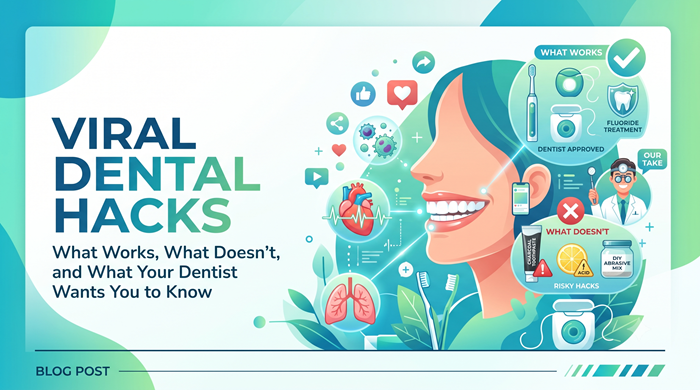
Social media has changed the way we learn about almost everything—including our teeth.
From DIY whitening tricks and homemade toothpaste recipes to videos promising to straighten teeth or repair cavities at home, dental “hacks” are everywhere online. Some may appear harmless, while others can potentially damage your teeth or gums.
With so much dental advice circulating on TikTok, Instagram, YouTube, and other platforms, how do you know what is actually safe?
At The Dental Place in Hamilton, we believe patients should have access to clear, reliable information about their oral health. Here’s a look at some common online dental trends and what you should know before trying them.
Why Are Dental Hacks So Popular?
Social media rewards quick, visually appealing solutions. A video showing someone dramatically whitening their teeth in minutes can be much more attention-grabbing than a dentist explaining the importance of consistent brushing and flossing.
The problem is that what’s popular online isn’t necessarily what’s safe or supported by dental evidence.
The Canadian Dental Association’s 2026 National Oral Health Month campaign encourages Canadians to focus on proven oral-health fundamentals rather than quick fixes or viral hacks.
When it comes to your teeth, a few seconds of research before trying a trend could prevent weeks, months, or even years of dental problems.
DIY Teeth Whitening: Be Careful
One of the most common online trends involves homemade teeth-whitening mixtures.
You may see recommendations involving acidic fruits, abrasive powders, or household ingredients.
The problem?
Some substances can irritate your gums or wear away tooth enamel. Once enamel is damaged, your body cannot simply grow it back.
If you want a brighter smile, talk to your dentist about professional or dentist-recommended whitening options instead. Your dentist can also determine whether discolouration is caused by surface staining, aging, medication, trauma, or another dental issue.
Don’t Use Abrasive Ingredients to “Scrub” Your Teeth
Another common misconception is that harder brushing or abrasive powders will make teeth cleaner and whiter.
Healthy teeth don’t need aggressive scrubbing.
Brushing too hard can contribute to enamel wear and gum recession, while abrasive products may make the surface of teeth appear temporarily brighter without addressing the underlying cause of discolouration.
A soft-bristled toothbrush and fluoride toothpaste are a much better everyday choice.
Oil Pulling Isn’t a Replacement for Brushing and Flossing
Oil pulling has become increasingly popular online, with claims that swishing oil can dramatically improve oral health.
While some people may enjoy it as part of their routine, it should never replace established oral hygiene practices.
The fundamentals remain simple:
- Brush twice daily with fluoride toothpaste.
- Clean between your teeth every day.
- Maintain regular dental appointments.
- Follow your dentist’s personalized recommendations.
These basic habits remain the foundation of preventive dental care.
Never Try to Fix a Cavity Yourself
Videos showing people attempting to repair cavities at home should be a major red flag.
A cavity is not simply a stain that can be scraped away. Tooth decay involves damage to the tooth structure and may require professional treatment.
Delaying care can allow decay to progress deeper into the tooth, potentially resulting in more extensive treatment.
If you notice a dark spot, sensitivity, pain, or a hole in your tooth, schedule a dental examination instead of attempting a DIY repair.
DIY Tooth Straightening Can Be Dangerous
Another concerning trend involves people attempting to move their teeth without professional orthodontic supervision.
Teeth don’t simply need to “look straight.” Their movement affects the surrounding bone, gums, roots, bite, and overall function.
Improper pressure can potentially cause unwanted movement or other complications.
If you’re interested in improving tooth alignment, speak with a dental professional about appropriate options such as Invisalign® or traditional orthodontic treatment.
What About Whitening Toothpaste?
Whitening toothpaste can be useful for removing certain types of surface stains, particularly those caused by foods and beverages.
However, whitening toothpaste doesn’t change the natural colour of your teeth in the same way professional whitening treatment can.
If you’re unhappy with the colour of your smile, your dentist can help determine which whitening option is appropriate for you.
The Best Dental “Hack” Is Actually Simple
Despite all the complicated advice online, maintaining good oral health doesn’t require dozens of products or an elaborate routine.
The Canadian Dental Association recommends getting back to the basics: brushing twice daily, flossing regularly, choosing trusted oral-care products, eating well, and maintaining regular dental visits.
Your daily routine can be as simple as:
Morning: Brush with fluoride toothpaste.
During the day: Drink water and be mindful of frequent sugary snacks and drinks.
Evening: Brush and clean between your teeth before bed.
Regularly: Visit your dentist for examinations and professional preventive care.
When Should You Talk to a Dentist?
Don’t rely on social media if you’re experiencing:
- Tooth pain
- Bleeding gums
- Persistent bad breath
- Tooth sensitivity
- Swelling
- Cracked or broken teeth
- Loose teeth
- Mouth sores that don’t heal
- Changes in the appearance of your gums or mouth
These symptoms deserve professional evaluation.
Get Dental Advice You Can Trust in Hamilton
At The Dental Place, we understand that it can be difficult to separate useful dental information from online misinformation.
Our team provides comprehensive dental care for individuals and families in Hamilton, including preventive, restorative, cosmetic, and orthodontic services. Rather than following a one-size-fits-all internet trend, we can assess your individual oral health and recommend treatment based on your specific needs.
Your Smile Isn’t a DIY Project
Social media can be a great source of information, but your teeth aren’t the place to experiment with unproven trends.
Before trying the latest viral dental hack, ask yourself one question:
“Would I let my dentist do this to my teeth?”
If the answer is no—or you’re simply unsure—talk to a dental professional first.
At The Dental Place in Hamilton, we’re here to help you make informed choices, protect your oral health, and keep your smile looking and feeling its best.
Book your dental appointment today and get advice you can trust—not just advice that’s trending online.