
invisalign

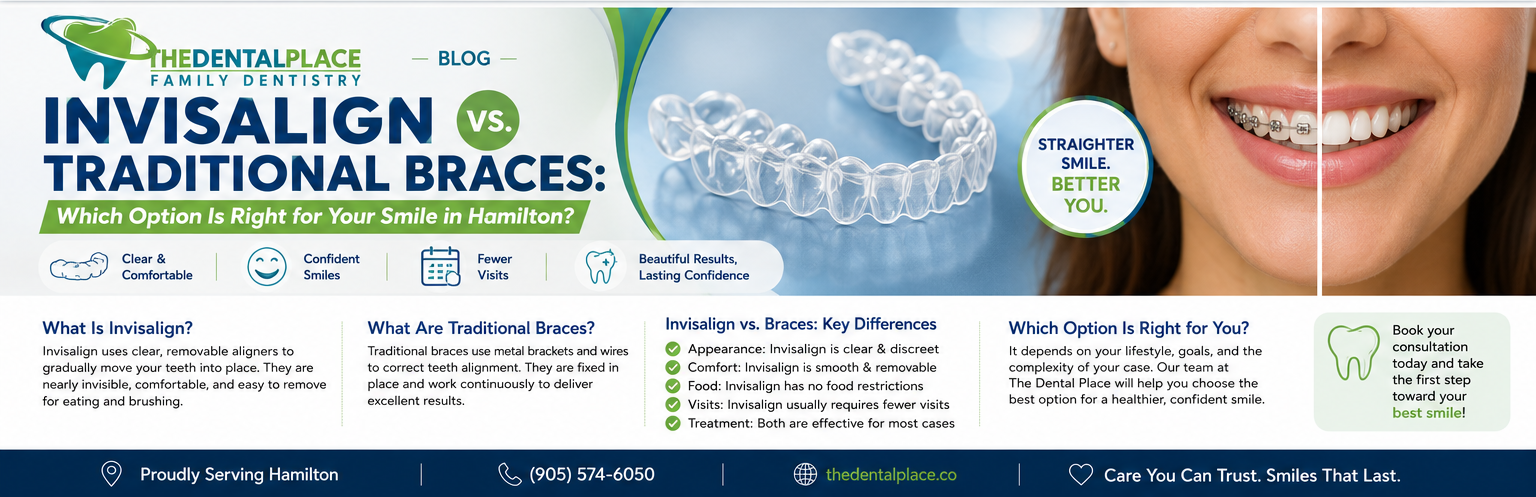
Invisalign vs. Traditional Braces: Which Option Is Right for Your Smile in Hamilton?

A straight, healthy smile is about more than appearance—it also plays an important role in your oral health and confidence. Crooked, crowded, or misaligned teeth can make brushing and flossing more difficult, increase the risk of tooth decay and gum disease, and even affect your bite.

If you’re considering orthodontic treatment, you’ve likely wondered whether Invisalign® or traditional braces are the better option. Both treatments are highly effective, but the right choice depends on your lifestyle, dental needs, and smile goals.

At The Dental Place in Hamilton, we help patients of all ages achieve beautifully aligned smiles with personalized orthodontic solutions. Here’s everything you need to know before making your decision.


What Is Invisalign®?

Invisalign is a modern orthodontic treatment that uses a series of custom-made, clear plastic aligners to gradually move your teeth into their ideal position.

Each aligner is designed specifically for your smile and is replaced every one to two weeks as your teeth shift throughout treatment.

Since the aligners are nearly invisible, Invisalign has become one of the most popular choices for teens and adults looking for a discreet way to straighten their teeth.


What Are Traditional Braces?

Traditional braces use metal brackets attached to each tooth and connected by orthodontic wires. These wires are adjusted periodically by your dentist or orthodontist to gradually move your teeth into proper alignment.

Modern braces are smaller, more comfortable, and more effective than ever before, making them an excellent option for patients with moderate to complex orthodontic concerns.


Appearance

One of the biggest differences between Invisalign and braces is visibility.

Invisalign

  • Nearly invisible aligners
  • Excellent for adults and professionals
  • No metal brackets or wires
  • Perfect for patients wanting a discreet treatment

Traditional Braces

  • Visible metal brackets
  • Coloured elastics can be customized
  • Suitable for patients who don’t mind a more noticeable appliance

If appearance is important to you, Invisalign is often the preferred choice.


Comfort

Comfort is another factor many patients consider.

Invisalign aligners are made from smooth plastic with no sharp edges.

Traditional braces may cause temporary discomfort after adjustments, and brackets can occasionally irritate the cheeks or lips until your mouth adapts.

Both treatments involve some pressure as teeth move, but this usually subsides after a few days.


Eating Your Favourite Foods

One of Invisalign’s biggest advantages is flexibility.

With Invisalign

Simply remove the aligners before eating.

You can continue enjoying foods like:

  • Popcorn
  • Apples
  • Pizza
  • Steak
  • Nuts
  • Corn on the cob

After eating, brush your teeth before placing the aligners back in your mouth.

With Braces

Certain foods should be avoided, including:

  • Hard candy
  • Sticky caramel
  • Popcorn
  • Ice
  • Chewing gum
  • Crunchy snacks

These foods may damage brackets or wires.


Oral Hygiene

Keeping your teeth clean is easier with Invisalign because the aligners are removable.

You can:

  • Brush normally
  • Floss normally
  • Clean your aligners separately

Braces require extra attention because food can become trapped around brackets and wires.

Special floss threaders and interdental brushes are often recommended.


Treatment Time

Treatment length varies depending on each patient’s needs.

On average:

Invisalign

  • Approximately 12–18 months

Traditional Braces

  • Approximately 18–24 months

Some complex orthodontic cases may require additional treatment time regardless of which option is chosen.


Which Dental Problems Can Invisalign Treat?

Thanks to advances in technology, Invisalign can successfully treat many common orthodontic issues, including:

  • Crooked teeth
  • Crowded teeth
  • Small gaps
  • Mild overbite
  • Mild underbite
  • Crossbite
  • Open bite

For more severe bite problems or significant jaw alignment issues, traditional braces may sometimes be the better option.

Your dentist will recommend the most effective treatment after evaluating your smile.


Commitment Matters

Unlike braces, Invisalign is removable.

Patients should wear their aligners 20–22 hours each day for the treatment to stay on schedule.

Removing them too often may delay results.

Traditional braces remain attached to the teeth, making them a great option for patients who may have difficulty remembering to wear removable aligners consistently.


Cost Considerations

Many patients are surprised to learn that Invisalign and traditional braces often have similar costs.

Pricing depends on factors such as:

  • Complexity of treatment
  • Treatment duration
  • Number of aligners required
  • Individual dental needs

Many dental insurance plans provide orthodontic benefits that may help reduce out-of-pocket expenses.

Flexible financing options are also available at many dental clinics.


Which Treatment Is Right for You?

Choosing between Invisalign and braces depends on several factors:

Invisalign May Be Best If You:

  • Prefer a nearly invisible treatment
  • Want removable aligners
  • Practice excellent oral hygiene
  • Have mild to moderate alignment concerns
  • Can commit to wearing aligners daily

Traditional Braces May Be Better If You:

  • Have more complex orthodontic issues
  • Want a treatment that doesn’t rely on patient compliance
  • Don’t mind visible brackets
  • Need greater tooth movement

A professional consultation is the best way to determine which option is right for your unique smile.


Why Patients Choose The Dental Place

At The Dental Place, we believe every patient deserves a confident, healthy smile. Our experienced team provides personalized orthodontic consultations and develops treatment plans tailored to your needs and lifestyle.

We proudly offer:

  • Invisalign® clear aligners
  • Comprehensive family dentistry
  • Preventive dental care
  • Cosmetic dentistry
  • Emergency dental services
  • Modern digital technology
  • Friendly, patient-focused care

Our goal is to make your orthodontic journey comfortable, convenient, and rewarding.


Start Your Smile Transformation Today

A straighter smile can improve not only your appearance but also your oral health and confidence.

Whether you’re interested in Invisalign or traditional braces, the team at The Dental Place is here to help you choose the treatment that’s best for you.

Book your consultation today and take the first step toward the healthy, beautiful smile you’ve always wanted.
invisalign

Clear Aligners: Latest Innovations and Future Trends in Teeth Straightening

In recent years, orthodontic treatment has undergone a significant transformation. Traditional metal braces, once the standard solution for straightening teeth, are increasingly being replaced by clear aligners. These modern orthodontic devices offer a discreet, comfortable, and convenient way to achieve a straighter smile. At The Dental Place, we believe in staying at the forefront of dental technology, and clear aligners represent one of the most exciting innovations in modern dentistry.

What Are Clear Aligners?

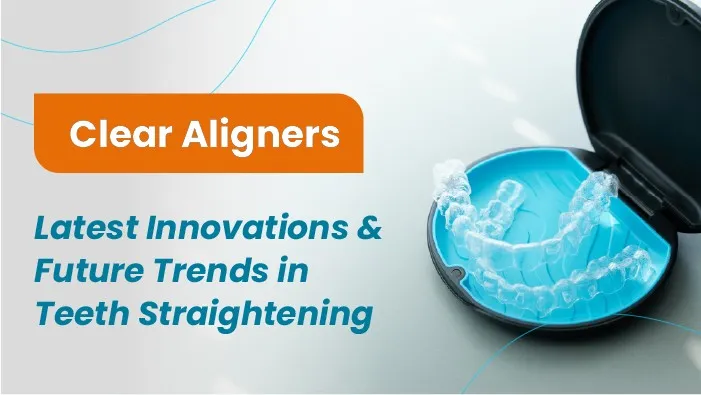
Clear aligners are transparent, removable trays that are custom-made to gradually shift teeth into their ideal position. Unlike metal braces that rely on brackets and wires, aligners use a series of precisely designed trays that apply gentle pressure to the teeth over time. Patients typically switch to a new set of aligners every one to two weeks as their teeth gradually move into alignment.

One of the biggest advantages of clear aligners is their nearly invisible appearance. Because they are made from transparent medical-grade plastic, they allow patients to straighten their teeth without the noticeable look of traditional braces. This has made them especially popular among adults and teenagers who prefer a more subtle orthodontic solution.

Latest Innovations in Clear Aligner Technology

Clear aligner technology has evolved rapidly in the past decade. Today’s aligner systems are more advanced, efficient, and comfortable than ever before.

  1. 3D Digital Scanning and Treatment Planning

Modern orthodontic treatments now use advanced 3D scanning technology to create precise digital models of a patient’s teeth. Instead of messy traditional impressions, dentists can capture highly accurate scans in minutes. These digital models allow specialists at The Dental Place to plan the entire treatment process and even show patients a simulation of how their smile will look after treatment.

  1. SmartTrack and Advanced Materials

New aligner materials have significantly improved treatment effectiveness. Advanced thermoplastic materials are designed to apply consistent and controlled force on teeth. These materials also improve comfort and ensure a snug fit, making treatment more predictable and efficient.

  1. Attachments and Precision Cuts

Small tooth-colored attachments can now be placed on certain teeth to help aligners grip and move them more effectively. Precision cuts in aligners can also work with elastics to correct complex bite issues. These advancements mean that cases once treated only with braces can now be successfully managed with clear aligners.

  1. Remote Monitoring and Virtual Checkups

With digital monitoring tools, we are now able to monitor the progress of the treatment remotely. The Dental Place can evaluate progress remotely and provide guidance without requiring frequent in-clinic visits.

Benefits of Clear Aligners

Clear aligners offer several benefits compared to traditional braces:

  • Discreet appearance: Nearly invisible when worn
  • Removable design: Easy to remove for eating, brushing, and flossing
  • Comfortable: Smooth plastic edges reduce irritation to gums and cheeks
  • Better oral hygiene: Since they can be removed, maintaining oral hygiene is easier
  • Fewer dental visits: Many patients require fewer adjustment appointments

At The Dental Place, we focus on providing treatments that fit seamlessly into our patients’ lifestyles, and clear aligners offer exactly that.

Future Trends in Teeth Straightening

The future of orthodontics looks even more promising as technology continues to evolve.

Faster Treatment Options

Researchers are working on technologies that can accelerate tooth movement, potentially reducing treatment time significantly. This may include vibration devices, improved aligner materials, and enhanced treatment planning algorithms.

More Personalized Treatments

Advancements in digital dentistry will allow orthodontists to design even more personalized treatment plans based on each patient’s unique dental structure, genetics, and bite alignment.

Integration with Cosmetic Dentistry

Clear aligner therapy is increasingly being combined with other cosmetic procedures such as teeth whitening, bonding, and veneers. This comprehensive approach allows patients to achieve not only straighter teeth but also a complete smile transformation.

Why Choose The Dental Place for Clear Aligners?

At The Dental Place, our goal is to provide advanced dental solutions that deliver outstanding results. Our experienced dental professionals use modern digital tools, high-quality aligner systems, and personalized treatment plans to ensure every patient receives the best possible care.

We guide patients through every step of the process—from initial consultation and digital scanning to final smile results. Whether you are dealing with crowded teeth, gaps, or mild bite issues, clear aligners could be the ideal solution for achieving the confident smile you deserve.

Final Thoughts

Clear aligners have revolutionized the field of orthodontics by offering a convenient, comfortable, and nearly invisible way to straighten teeth. With continuous innovations in digital technology and materials, the future of clear aligners looks brighter than ever.

If you are considering orthodontic treatment, clear aligners may be the perfect option. Contact The Dental Place, we are proud to offer cutting-edge solutions that help our patients smile with confidence.

invisalign

Understanding Orthodontic Options in Canada: Braces vs. Invisalign

Orthodontic treatment has evolved over the years, offering patients more options than ever before to achieve a healthy, beautiful smile. In Canada, two of the most popular orthodontic treatments are traditional braces and Invisalign. At The Dental Place, our team of professionals is dedicated to providing personalized care and helping you achieve the smile you’ve always wanted. Both treatments are highly effective for correcting dental alignment issues, but they work in different ways and have distinct benefits. Understanding the differences between braces and Invisalign can help you make an informed decision about which treatment is best suited for your needs.

What Are Traditional Braces?

Traditional braces consist of metal brackets that are attached to the teeth and connected by a wire. These braces gradually move the teeth into the correct positions by applying continuous pressure over time. The wire is periodically tightened by the orthodontist to further adjust the alignment of the teeth. The metal brackets may be visible, but modern braces come in various styles, including clear or tooth-colored options, to reduce their visibility.

What Is Invisalign?

Invisalign is a modern alternative to traditional braces, using clear, removable aligners to shift teeth into their ideal position. These aligners are custom-made for each patient using 3D imaging technology. Invisalign aligners are designed to be worn for about 22 hours a day, only being removed when eating or drinking and for oral hygiene routines. As the treatment progresses, patients switch to a new set of aligners every few weeks, each one moving the teeth closer to their desired position.

Comparing Braces and Invisalign

  1. Aesthetic Appeal:

One of the main advantages of Invisalign is its discreet appearance. Since the aligners are made of clear plastic, they are nearly invisible when worn, making them a popular choice for adults and teenagers who are concerned about their appearance during treatment. On the other hand, traditional braces are more visible, though modern advancements have led to less noticeable options such as ceramic or clear braces.

For those seeking a less noticeable treatment, Invisalign offers a clear advantage in terms of aesthetics. However, some people may not mind the appearance of braces, especially if they are more focused on the long-term results.

  1. Comfort:

Invisalign is generally considered more comfortable than traditional braces. The smooth plastic aligners don’t have brackets or wires that could irritate the inside of the mouth, a common complaint among those with braces. Additionally, Invisalign aligners are removable, which allows for easy cleaning and eliminates the need to modify one’s diet to avoid damaging the braces.

With traditional braces, patients may experience discomfort during the adjustment process when the wires are tightened. Braces can also make it difficult to clean teeth properly, requiring extra effort to avoid plaque buildup around the brackets and wires. Certain foods, such as sticky or hard items, should be avoided to prevent damage to the braces.

  1. Treatment Duration:

The length of orthodontic treatment depends on the severity of the dental issue being addressed. In general, both braces and Invisalign can achieve similar results in terms of treatment duration, but the overall timeline may vary. For more complex cases, traditional braces might be the better option, as they offer greater control over tooth movement. However, Invisalign can often be a quicker option for mild to moderate misalignment cases.

Your orthodontist will assess your specific needs and recommend the best treatment plan for you. In some cases, Invisalign may be able to achieve the desired results in a shorter amount of time than traditional braces, but this will depend on your individual circumstances.

  1. Maintenance and Convenience:

One of the standout benefits of Invisalign is its convenience. Since the aligners are removable, patients can continue to eat and drink whatever they want without worrying about damaging their braces. Brushing and flossing is also easier with Invisalign, as the aligners can be taken out to clean teeth properly.

In contrast, braces require more effort when it comes to oral hygiene. Special tools, such as orthodontic flossers or interdental brushes, are often needed to clean around the brackets and wires. Additionally, certain foods like popcorn, nuts, and hard candies should be avoided to prevent damage to the braces. Regular orthodontic visits are required to tighten the braces and monitor progress.

  1. Effectiveness:

Both braces and Invisalign are effective in treating a variety of orthodontic issues, such as crowded teeth, gaps, overbites, underbites, and crossbites. However, traditional braces may be better suited for more complex cases. The brackets and wires provide more precise control over tooth movement, which can be crucial when addressing severe alignment issues.

Invisalign, while effective for many cases, may not be the best option for individuals with significant bite issues or complex tooth movements. However, advances in Invisalign technology, including the introduction of SmartTrack material and precision cuts, have made it increasingly effective for a wider range of patients.

  1. Cost:

The cost of braces and Invisalign treatment in Canada can vary depending on the severity of the orthodontic issues, the type of braces or Invisalign aligners used, and the length of the treatment. On average, the cost of traditional braces tends to be slightly lower than Invisalign, but the price difference may not be significant.

It’s important to consult with your orthodontist to get an accurate estimate for your specific case. Many dental offices in Canada offer payment plans or financing options to make orthodontic treatment more accessible.

Conclusion

Both traditional braces and Invisalign offer effective solutions for improving dental alignment, but the best choice depends on your personal preferences, lifestyle, and the complexity of your orthodontic needs. Invisalign is a great option for those seeking a discreet, comfortable, and convenient treatment, while traditional braces may be the better choice for individuals with more complex dental issues.

If you’re considering orthodontic treatment in Canada, it’s essential to consult with an experienced orthodontist who can assess your unique needs and help you choose the best treatment option. Contact us today to schedule a consultation and learn more about your orthodontic options.

Dental

Invisalign vs. Traditional Braces: Which Treatment is Best?

Choosing the right treatment can be a significant decision for many people looking to achieve a straighter, healthier smile. With advancements in dental technology, patients now have more options than ever, with Invisalign and traditional braces being the two most popular choices. Both methods are highly effective in correcting misaligned teeth, but they cater to different needs and preferences. In this blog, we’ll explore the differences between Invisalign and traditional braces, their advantages and disadvantages, and help you determine which treatment might be best for you.

Understanding Invisalign

Invisalign is a modern treatment that uses a series of custom-made, clear plastic aligners to gradually move teeth into their desired position. These aligners are virtually invisible, making them a popular choice for individuals who want a discreet option for straightening their teeth.

How Does Invisalign Work?

Invisalign treatment begins with a consultation with your dentist, where a digital scan of your teeth is taken. Using this scan, a custom treatment plan is created, mapping out the movement of your teeth over time. You’ll receive a set of aligners, each to be worn for about two weeks before moving on to the next set. As you progress through the series of aligners, your teeth gradually shift into place.

Benefits of Invisalign

  1. Aesthetics: One of the main advantages of Invisalign is that the aligners are clear and virtually unnoticeable. This makes them an excellent option for adults and teenagers who might feel self-conscious about wearing traditional metal braces.
  2. Comfort: Invisalign aligners are made of smooth plastic, which is less likely to irritate your gums and cheeks compared to the metal wires and brackets of traditional braces.
  3. Removability: The aligners can be removed when eating, drinking, brushing, and flossing, allowing for greater convenience and easier oral hygiene maintenance.
  4. No Dietary Restrictions: Since Invisalign aligners are removable, you can continue to enjoy all your favorite foods without worrying about damaging your braces.

Drawbacks of Invisalign

  1. Discipline Required: For Invisalign to be effective, the aligners need to be worn for 20-22 hours a day. Forgetting to wear them or not wearing them long enough can delay the treatment progress.
  2. Limited Effectiveness for Complex Cases: Invisalign may not be suitable for severe issues, such as significant crowding or large gaps. Traditional braces might be a better option for these cases.
  3. Cost: Invisalign is often more expensive than traditional braces, which could be a consideration for some patients.

Understanding Traditional Braces

Traditional braces are the most common and time-tested method for correcting misaligned teeth. They consist of metal brackets that are bonded to the teeth and connected by wires, which are adjusted periodically to guide the teeth into their correct positions.

How Do Traditional Braces Work?

Once the braces are applied, the dentist will periodically tighten the wires, which puts pressure on the teeth and gradually moves them into alignment. This process continues until the desired result is achieved.

Benefits of Traditional Braces

  1. Effectiveness: Traditional braces are highly effective for treating a wide range of issues, from minor to severe cases. They can address complex problems such as extreme crowding, large gaps, and significant bite issues.
  2. No Discipline Needed: Unlike Invisalign, traditional braces are fixed in place, so there’s no need to worry about forgetting to wear them. This can be particularly beneficial for younger patients who may not be as disciplined in wearing aligners.
  3. Customizable: Today’s braces offer a variety of options, including clear or tooth-colored brackets and wires, allowing for a more discreet appearance. Some patients, especially younger ones, can choose colored bands for a fun, personalized touch.

Drawbacks of Traditional Braces

  1. Aesthetic Concerns: The most significant disadvantage of traditional braces is their visibility. While they are effective, the metal brackets and wires are noticeable, which may be a concern for some individuals.
  2. Discomfort: The metal components of traditional braces can cause irritation to the cheeks, lips, and gums, especially right after adjustments. It can also take some time to get used to the sensation of having braces.
  3. Dietary Restrictions: With traditional braces, certain foods, such as hard candies, sticky sweets, and crunchy snacks, should be avoided to prevent damaging the braces.
  4. Hygiene Challenges: Brushing and flossing can be more challenging with braces, as food particles can easily get trapped around the brackets and wires, increasing the risk of plaque buildup and cavities.

Which Treatment is Best?

The best treatment for you depends on your specific needs, lifestyle, and preferences. If aesthetics and comfort are your top priorities, and your issues are not overly complex, Invisalign might be the ideal choice. On the other hand, if you have more severe dental issues or prefer a solution that doesn’t require self-discipline, traditional braces might be more suitable.

At The Dental Place, our team of experienced dentists can help you determine the best treatment plan tailored to your unique situation. We provide free Invisalign consultation. You can call 905-574-9617 and Schedule a consultation today to start your journey towards a healthier, more confident smile!