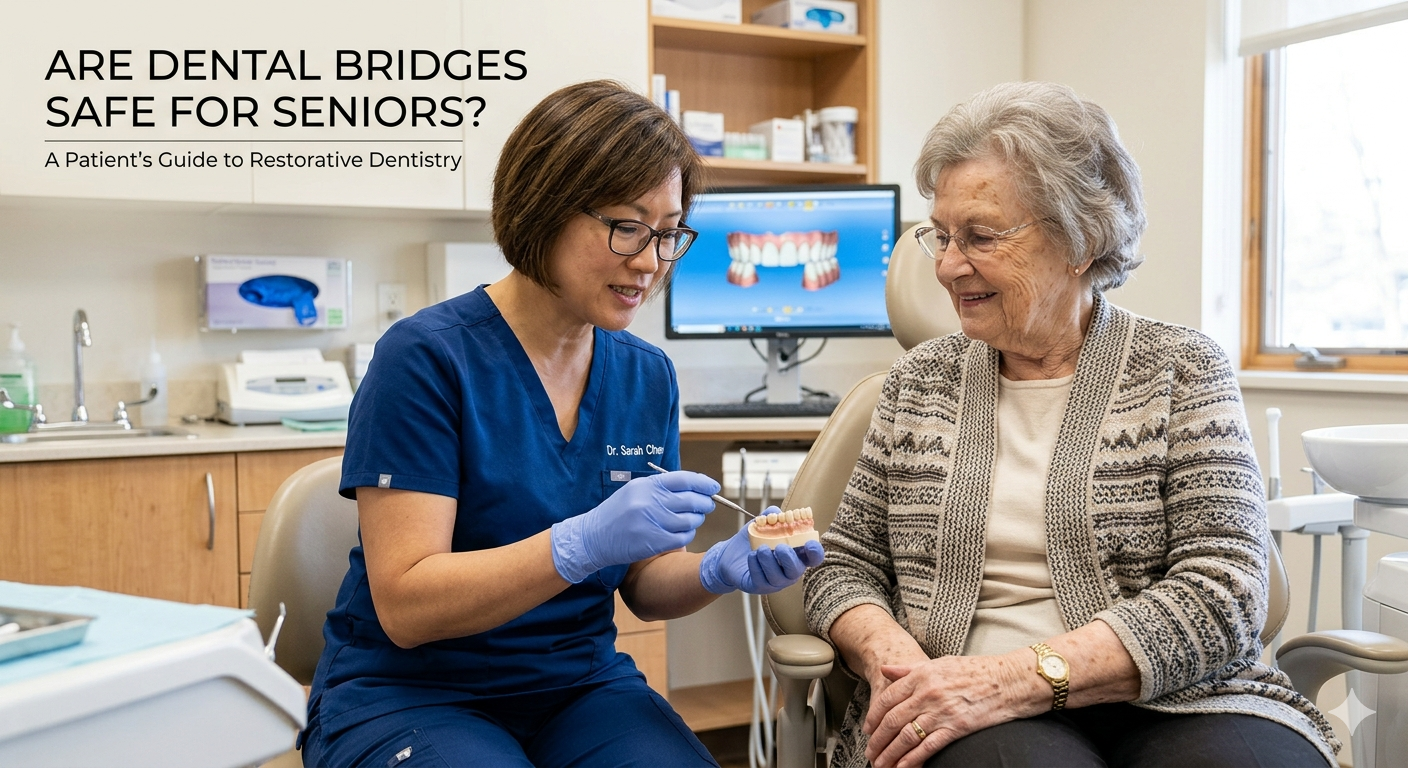
Tooth loss is a common dental concern among older adults, but it does not have to affect quality of life. Missing teeth can make everyday activities like eating, speaking, and smiling more difficult. Fortunately, modern dentistry offers several reliable solutions, including dental bridges. Many seniors considering tooth replacement often ask, “Are dental bridges safe for seniors?” The answer is yes. Dental bridges are generally safe, effective, and widely recommended for older adults who want to restore their smile and oral function.
At The Dental Place, we understand the importance of comfortable, long-lasting dental solutions for seniors. Dental bridges can help improve both oral health and confidence when properly placed and maintained.
What Is a Dental Bridge?
A dental bridge is a fixed dental restoration used to replace one or more missing teeth. It works by filling the gap with an artificial tooth, called a pontic, that is supported by nearby natural teeth or dental implants.
There are several types of dental bridges available, including:
- Traditional bridges
- Cantilever bridges
- Maryland bridges
- Implant-supported bridges
The right type of bridge depends on the patient’s oral health, the location of the missing teeth, and overall treatment goals.
Why Tooth Replacement Matters for Seniors
Many seniors assume missing teeth are simply a natural part of aging, but untreated tooth loss can lead to several oral health issues. Missing teeth may cause:
- Difficulty chewing healthy foods
- Speech problems
- Jawbone deterioration
- Shifting of nearby teeth
- Changes in facial appearance
- Lower self-confidence
Replacing missing teeth with a dental bridge can help prevent these complications while restoring normal oral function.
Are Dental Bridges Safe for Older Adults?
Dental bridges are considered a safe and proven treatment option for seniors. Age alone does not determine whether someone is a good candidate for a bridge. Instead, dentists evaluate overall oral health, gum condition, and the strength of the surrounding teeth.
Before recommending a dental bridge, your dentist will perform a complete examination that may include X-rays and a review of your medical history. This helps ensure the treatment is both safe and successful.
For many seniors, dental bridges provide a less invasive alternative to dental implants while offering more stability than removable dentures.
Benefits of Dental Bridges for Seniors
Improved Chewing and Eating
Missing teeth can make it difficult to eat certain foods, especially healthy options like fruits, vegetables, and lean meats. Dental bridges restore bite function, making it easier for seniors to maintain a balanced and nutritious diet.
Better Speech
Teeth play an important role in clear pronunciation. Gaps caused by missing teeth can affect speech patterns. A dental bridge helps improve speech clarity and communication.
Enhanced Appearance
A complete smile can make a significant difference in self-esteem and social confidence. Dental bridges are designed to look natural and blend seamlessly with surrounding teeth.
Prevents Teeth from Shifting
When teeth are missing, neighboring teeth may gradually shift into the empty space. This movement can cause bite problems and increase the risk of additional dental issues. Bridges help maintain proper alignment.
Comfortable and Stable
Unlike removable dentures, dental bridges are fixed in place. Many seniors appreciate the stability and convenience they provide during daily activities such as eating and speaking.
Are There Any Risks?
Although dental bridges are generally safe, there are some considerations seniors should keep in mind.
Gum Health Is Important
Healthy gums are essential for supporting a dental bridge. Seniors with gum disease may need treatment before receiving a bridge.
Supporting Teeth Must Be Strong
Traditional bridges rely on nearby teeth for support. These teeth need to be healthy and strong enough to hold the bridge securely.
Oral Hygiene Matters
Bridges require proper cleaning to prevent plaque buildup and decay around supporting teeth. Special flossing tools and regular dental visits can help maintain oral health.
Normal Wear Over Time
Like other dental restorations, bridges may eventually need repair or replacement after years of use. With good care, however, many bridges can last well over a decade.
Tips for Caring for Dental Bridges
Seniors can extend the life of their dental bridge by following a few simple oral care habits:
- Brush teeth twice daily with fluoride toothpaste
- Floss carefully around the bridge
- Use interdental brushes or floss threaders if recommended
- Visit the dentist regularly for checkups and cleanings
- Avoid chewing hard objects such as ice or hard candies
Good oral hygiene is the key to keeping both the bridge and surrounding teeth healthy.
Dental Bridges vs. Dentures for Seniors
Both bridges and dentures can replace missing teeth, but they offer different advantages. Dental bridges are fixed and generally feel more natural and secure. Dentures, on the other hand, may be recommended when multiple teeth are missing.
The best option depends on several factors, including oral health, budget, and personal preference. A consultation with a dental professional can help determine the most suitable treatment.
Final Thoughts
Dental bridges are a safe and effective solution for many seniors dealing with missing teeth. They can improve chewing ability, speech, appearance, and overall oral health. With proper care and regular dental visits, dental bridges can provide long-lasting comfort and confidence.
At The Dental Place, our team is dedicated to helping seniors achieve healthy, functional smiles with personalized dental care. If you are considering a dental bridge, Contact our team to guide you through every step of the process and help you find the best solution for your needs.